Indoor Cat Enrichment: DIY Toys, Play and Home Tips
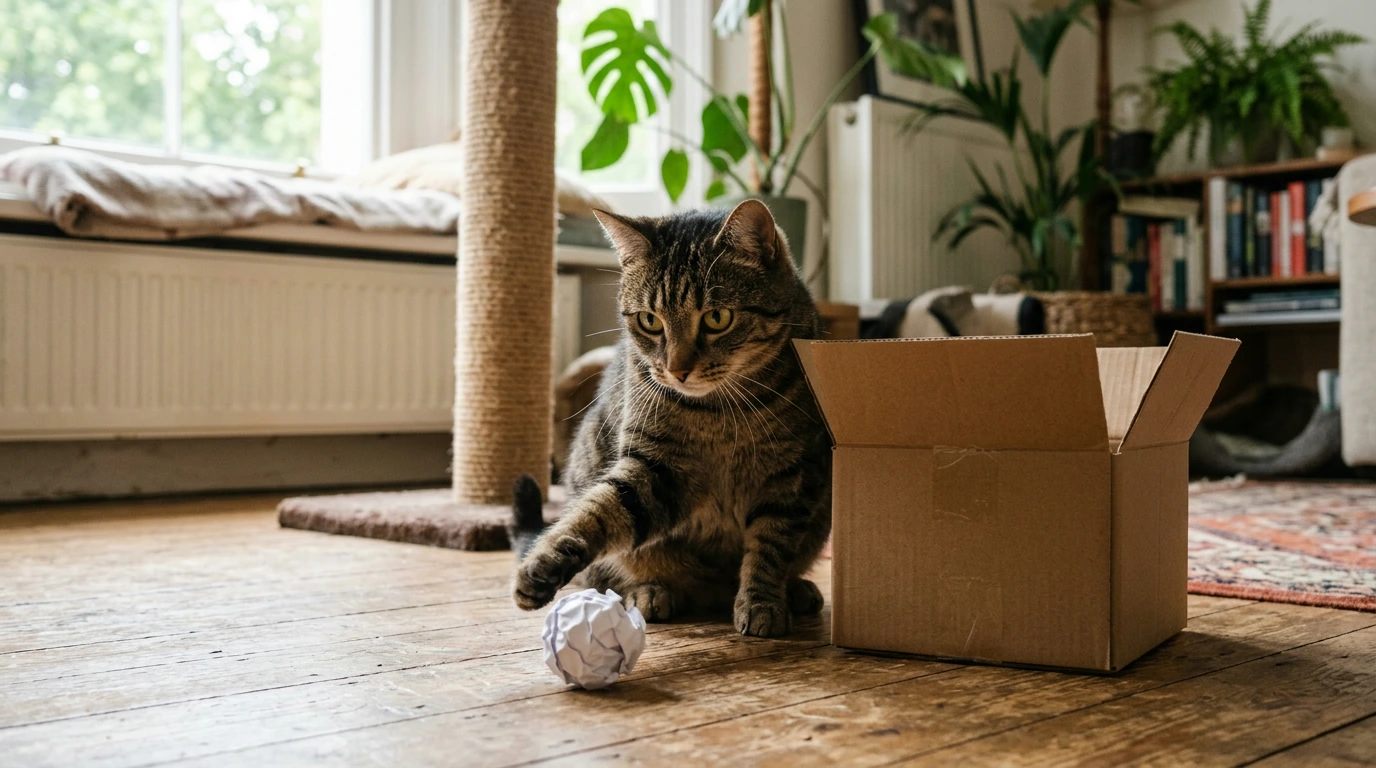
A more engaging indoor day can start with a box, a short play session, and a cozy place to watch the world. You don’t need to transform your home overnight: small opportunities to explore and play can give your cat more choices throughout the day.
Our printable cat enrichment guide brings together DIY toy ideas, play routines, and cat-friendly home tips. Use it as a companion while you discover which activities your cat enjoys and which spaces feel most comfortable.
Make Room for Everyday Exploration
Indoor cats can benefit from having different ways to interact with their surroundings. A scratching surface offers a place to stretch and scratch, while a hiding spot gives your cat somewhere to retreat. A stable perch can provide a new view, and a short game can invite stalking and chasing.
Before rearranging furniture or adding several new items, watch where your cat already likes to rest and play. Does your cat settle near a window, disappear into a quiet room, or chase toys down a hallway? Those preferences can help you choose a useful spot for a box, perch, or play session.
Our team recommends starting with one change and leaving it in place long enough for your cat to investigate. The Ohio State University Indoor Pet Initiative offers more information about creating an engaging indoor environment.
Try Simple DIY Toys
Household materials can make an inviting starting point for supervised play. Roll a crumpled paper ball across the floor and see whether your cat wants to follow it. An open cardboard box in a quiet spot can become a place to explore, hide, or pause between play sessions.
For an easy search game, place a few pieces of your cat’s usual food in accessible spots. Start where your cat can see or smell them easily, rather than making the search frustrating. Include the pieces in your cat’s daily food intake.
Avoid small detachable parts and loose string, which a cat could swallow. Supervise homemade toys and put them away if they become damaged or your cat starts chewing and eating the material.
| Idea | How to Start | Safety Tip |
|---|---|---|
| Paper ball | Roll a crumpled piece of paper across the floor. | Remove it if your cat starts eating it. |
| Cardboard hideout | Place an open box in a quiet spot. | Remove staples and loose tape. |
| Food search | Hide a few pieces of usual food in easy spots. | Count the food as part of daily intake. |
| Window watch | Offer a stable resting spot near a window. | Keep windows and screens secure. |
Build a Play Routine Your Cat Enjoys
Regular play doesn’t have to take a large block of time. Offer a short session when your cat is alert, perhaps before a meal or during an active part of the day. Adjust the length to your cat’s age, energy, and interest rather than aiming for a fixed number of minutes.
With a wand toy, try moving the toy end along the floor or briefly behind a piece of furniture, as prey might move. Pause to give your cat time to stalk, then allow a chase and a satisfying catch. Keep the toy away from your cat’s face, supervise the session, and store string toys out of reach afterward.
Rotate activities to keep options fresh: a wand game one day, a paper ball or food search another. If your cat walks away, hides, or seems stressed, stop and offer space. The VCA guide to cat play and toys explains more about choosing and using playthings.
Create a Cat-Friendly Home
A sturdy scratching surface, a quiet hiding place, and an accessible elevated perch are useful starting points where space allows. The perch should be stable and easy for your cat to reach and leave. If jumping is difficult, choose a lower resting spot or provide a safe route up.
Keep food, water, litter areas, and resting places accessible and comfortably separated. Avoid crowding a new play area around the litter box or blocking the path to a favorite bed. In a small home, a clear corner or a stable shelf can add variety without filling every available space.
Introduce changes gradually and let your cat decide whether to investigate. A box that sits untouched today may become a favorite hiding place later, while another option may simply be more appealing.
Use the Printable Guide to Find Your Next Idea
Our printable cat enrichment guide is listed at $6.99 USD and covers DIY toys, play routines, and cat-friendly home tips. Choose one idea at a time, try it in a comfortable setting, and notice whether your cat approaches, plays, rests, or walks away.
You can keep the ideas that suit your household and adapt your routine as your cat’s interests change. For your own household planning, we also offer a healthy meal plan and recipe collection for people.
FAQ
How often should I play with my indoor cat?
Offer short, regular sessions and adjust them to your cat’s age, energy, and interest. Let your cat end play when it wants to.
What can I use for a simple homemade cat toy?
Try a crumpled paper ball or an open cardboard box. Supervise play and remove damaged items or anything your cat might swallow.
How can I make a small home more interesting for my cat?
Add a stable perch, a scratching surface, and a quiet hiding place where practical. Rotate safe play activities without crowding food, water, litter, or resting areas.











Leave a comment